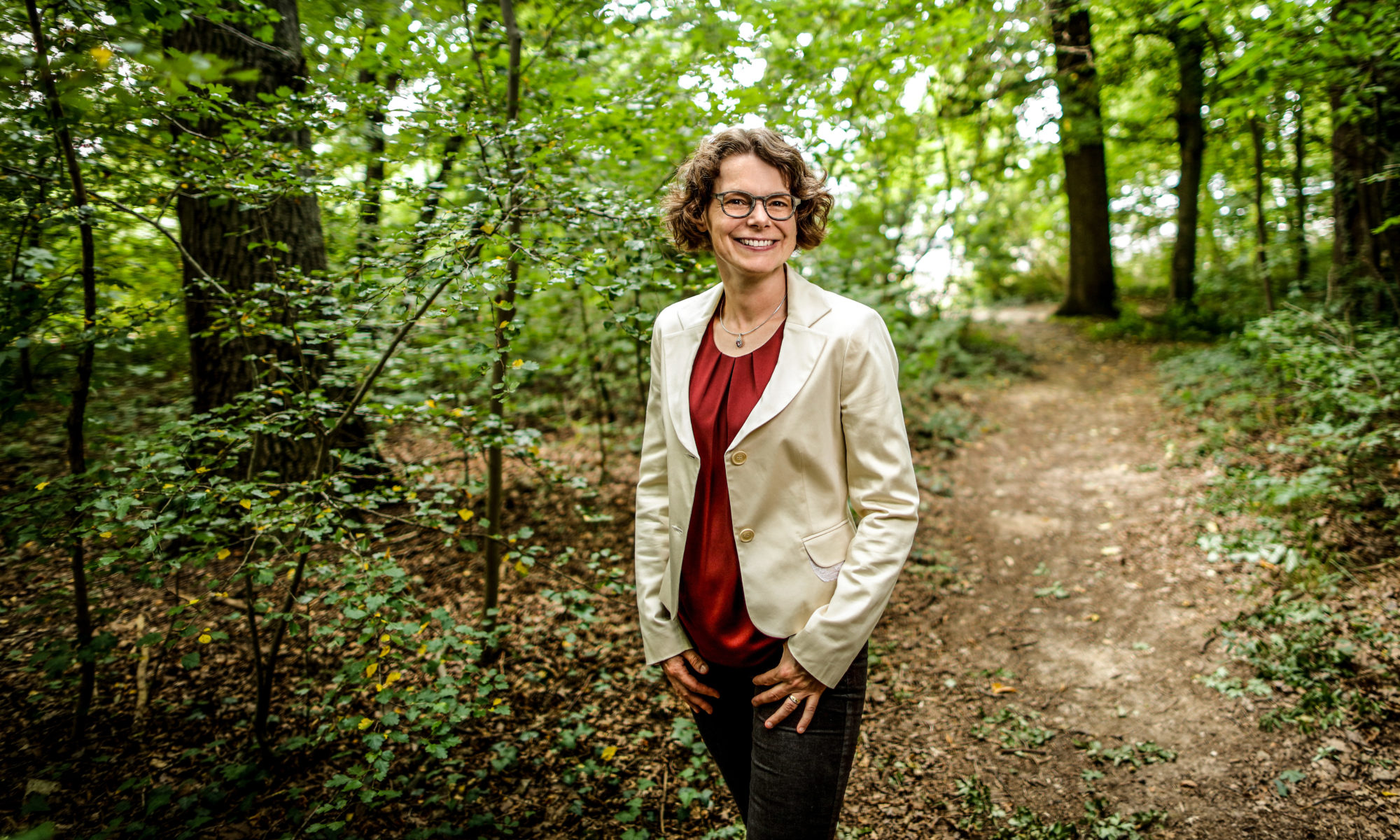

Here you can find the qualifications of Andrea Bruhn.
Training and certificates
- Certified Business Coach, European Association of NLP (EANLP), Brussels
- Certified Master Coach, DVNLP
- Certified NLP-Master, DVNLP
- Faclitator for Change Processes/ Change Management, Robert Bosch Stiftung GmbH, MaiConsulting GmbH & Co. KG
- Systemic NLP Coach, Odenwald-Institute
Academic qualifications
- Master of Science in Gender and Development, Asian Institute of Technology (AIT), Bangkok, Thailand
- Master of Science in Ethnicity and Identitiy, University of Bradford, United Kingdom
Further Training
- Facilitation & process support
- Art of Hosting/ Participatory Leadership
- Theory U
- Teambuilding
- Non-violent communication
- Intercultural communication
- Prevention and resolution of conflicts
- Negotiation
- Advisory competence
- Peer and group counselling
- Transaction analysis
- Creativity techniques

Publications
Barth, Matthias, Andrea Bruhn, David P.M. Lam, Matthias Bergmann und Daniel J. Lang (2020): “Capacity building for transformational leadership and transdisciplinarity”, in: Gaia: The Transdisciplinary Journal, vol. 29, No. 3, S. 195-197
Bruhn, Andrea und Rehak-Nitsche, Katrin (2020): “Wissenschaft für Zukunft: Der Beitrag der Postdoc Academy for Transformational Leadership”, in: Stiftung & Sponsoring: Das Magazin für Nonprofit-Management und -Marketing, 2020, No. 4, S. 16-17
Bruhn, Andrea und Giebelhausen, Annett (2017): “Our Common Future: Mit jungen Menschen zu Nachhaltigkeit forschen, in: Bildung aktuell: Wir machen Schule, vol. 68, No. 2, S. 10.
Bruhn, Andrea (2014): “Grenzen überschreiten: Wie die EUPCA wurde, was sie ist”, in: Stiftung & Sponsoring: Das Magazin für Nonprofit-Management und -Marketing, 2014, No. 6, S. 32-33
Bruhn, Andrea (2014): “In Führung gehen: Nachwuchsführungskräfte für die Palliativversorgung”, in: Die Schwester Der Pfleger: Die führende Fachzeitschrift für die Pflege, vol. 53, No. 9, S. 926-927
Bruhn, Andrea (2009): “Stiftungsarbeitskreis Berufsbildung Osteuropa: Kooperation über Grenzen”, in: Stiftung & Sponsoring: Das Magazin für Nonprofit-Management und -Marketing, 2009, No. 2, S. 10
Here you can find our more about Andrea Bruhn and her career.
Here you can find customer testimonials on the services of Andrea Bruhn.